


Can Dogs Eat Strawberries? A Practical Guide for Dog Moms
As pet parents, the desire to share a tasty treat with our furry friends is hard to resist. Strawberries, with their juicy sweetness and vibrant color, often spark curiosity—but are they safe for dogs? The short answer is yes, dogs can enjoy strawberries in moderation. Not only are they a refreshing, low-calorie snack, but they’re also packed with beneficial nutrients like fiber, vitamin C, and antioxidants.
However, there are some important considerations to keep in mind when adding this fruit to your dog’s diet, from portion sizes to preparation methods. Understanding these details ensures your pup stays happy, healthy, and safe. Let’s explore what you need to know about feeding strawberry to your pup
Are Strawberries Safe for Dogs?
Strawberries are a delightful treat, loved not just by humans but also by many of our furry friends. They are non-toxic to dogs and, when given in moderation, can offer numerous health benefits. However, there are a few details pet owners should consider to ensure this fruity snack remains a healthy addition to their dog’s diet.
Nutritional Benefits

Strawberries are packed with essential vitamins and minerals that make them an excellent snack for dogs:
- Vitamin C: Boosts the immune system and aids in fighting off infections.
- B Vitamins (B-1, B-6): Supports healthy brain function and energy metabolism.
- Vitamin K: Crucial for proper blood clotting and bone health.
Additionally, strawberries contain:
- Magnesium and Potassium: Important for maintaining muscle health and a steady heartbeat.
- Iodine and Folic Acid: Support thyroid health and proper cellular function.
Strawberries are also high in fiber, which promotes healthy digestion and can help regulate bowel movements, especially in dogs prone to constipation. The small amount of omega-3 fatty acids found in strawberries contributes to a shiny coat and healthy skin. This combination of nutrients ensures your dog stays vibrant, energetic, and full of life.
Potential Risks
Though strawberries are generally safe for dogs, there are some risks to keep in mind. Firstly, their natural sugar content might pose problems, especially for dogs with diabetes or those sensitive to sugary treats. Overconsumption may lead to complications like weight gain or a spike in blood sugar levels.
Dental Concerns: The sugars in strawberries can contribute to plaque buildup and cavities if your dog’s teeth are not properly cared for. Regular teeth brushing is vital if strawberries become a frequent treat in your dog’s diet.
Other potential risks include:
- Digestive Upset: Too many strawberries at once can overwhelm your dog’s stomach, causing diarrhea or vomiting.
- Choking Hazard: Large strawberries may present a choking risk, particularly for smaller breeds. Cutting them into bite-sized pieces helps prevent this issue.
By introducing strawberries to your pet’s diet with care and moderation, you can add a burst of natural sweetness and nutrition while minimizing any potential downsides. Just remember, each dog is unique, always monitor for any adverse reactions and consult with your veterinarian if you’re uncertain.
How to Properly Serve Strawberries to Dogs
While strawberries can be a safe and tasty treat for dogs, it’s important to prepare and serve them correctly. Not all dogs are the same, so taking a few precautions ensures your pup enjoys strawberries without any health risks. Let’s dive into how to safely prepare this snack and determine appropriate portion sizes.
Preparation Tips

When it comes to treating your dog with strawberries, preparation is key. Here’s how you can ensure they’re served safely:
- Wash Thoroughly: Always rinse strawberries under running water to remove dirt, bacteria, and pesticides. Even organic strawberries need a good wash.
- Remove Leaves & Stems: The green parts can be tough to digest and might upset your dog’s stomach or pose a choking risk.
- Cut Into Bite-Sized Pieces: Depending on your dog’s size, chop strawberries into small, manageable pieces. For tiny breeds, quartering or slicing strawberries into thin sections works best.
Appropriate Portion Sizes
Portion control matters when feeding dogs strawberries or any other treat. While strawberries are a low-calorie snack, eating too many can upset your dog’s stomach or lead to unnecessary sugar intake. Here’s a simple guideline based on your dog’s size:
- Small Breeds (e.g., Chihuahuas, Yorkshire Terriers): 1-2 small strawberry pieces as a treat.
- Medium Breeds (e.g., Beagles, Cocker Spaniels): A few thin slices, spaced out during the day.
- Large Breeds (e.g., Labradors, German Shepherds): Up to a handful of bite-sized pieces.
It’s essential to follow the 10% Treat Rule: Treats, including strawberries, should make up no more than 10% of your dog’s daily calorie intake. For example, a 30-pound dog requiring about 800 calories a day should only consume 80 calories from treats. This ensures their regular diet remains balanced. For more insights on treat portion sizes, visit this helpful guide from AKC.
Take cues from your dog’s behavior and monitor how they react to strawberries. If they seem overly content or disinterested, adjust the portions accordingly. Remember, moderation is key to keeping your furry friend happy and healthy!
Signs of Adverse Reactions
Introducing a new food, even something as seemingly harmless as strawberries, can sometimes lead to adverse reactions in dogs. While most pups will enjoy this sweet treat without issue, it’s crucial for pet parents to know what warning signs to look out for. Understanding these symptoms could mean the difference between a mild upset and a more serious health concern.
Symptoms to Monitor
Dogs react differently to new foods depending on their unique sensitivities. Here are some common signs of adverse reactions you should watch for after feeding strawberries:
- Vomiting: If your dog begins throwing up shortly after eating strawberries, their stomach may be struggling to process the fruit.
- Diarrhea: Loose or watery stools are a common sign that your dog’s digestive system isn’t agreeing with the new treat.
- Lethargy: A tired or unusually inactive dog could indicate an upset stomach or an allergic reaction triggering fatigue.
- Increased Thirst: Excessive thirst might sometimes point towards minor issues like dehydration caused by diarrhea—or it could be a sign of more severe reactions.
Other signs to keep on your radar include hives, facial swelling, or difficulty breathing. These symptoms may indicate an allergic reaction rather than simple digestive upset. Allergies in dogs might even present with swelling around the face or muzzle, redness, and constant licking or itching. If you notice these symptoms, stop feeding strawberries immediately and consult your veterinarian. You can read more about how to address allergic reactions in dogs in this PetMed Guide.
Types of Strawberries to Avoid
While strawberries are generally safe for dogs, not all forms of this fruit are created equal. Certain types of strawberries and strawberry-flavored products can pose significant risks to your pet’s health. Here’s what you need to know to keep your dog safe.
Processed and Canned Strawberries
Processed strawberries, such as those found in syrups, jams, or cans, are packed with additives that are harmful to dogs. These additives often include high amounts of sugar, artificial sweeteners, and preservatives, which can lead to obesity, digestive issues, or even poisoning. In particular, some processed products might contain xylitol, a sweetener that is extremely toxic to dogs and can cause severe drops in blood sugar and liver failure.
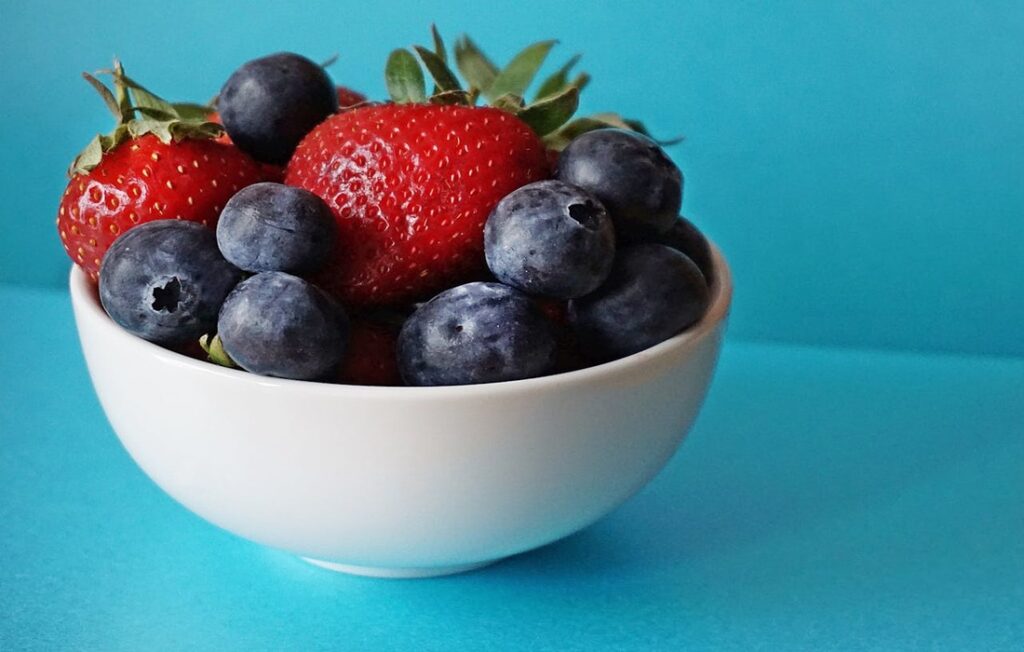
Wild Strawberries
Wild strawberries might seem like a natural and healthy option, but they come with their own risks. These strawberries can be exposed to pesticides, herbicides, and potential contaminants like bacteria or parasites from wildlife. Even though wild strawberries are non-toxic, the uncertainty about their origins adds unnecessary risk to your dog’s diet.
Strawberry-Flavored Products
Strawberry-flavored yogurt, ice cream, or candies may taste delicious to us but are bad news for dogs. These items often contain excessive sugars, dairy, and harmful ingredients like xylitol, which can be life-threatening for dogs. Additionally, the high-fat content in ice creams may lead to pancreatitis or other gastrointestinal problems in pets.
Instead of flavored products, consider giving your dog fresh strawberries as an alternative. Read more about the dangers of xylitol in Preventive Vet’s comprehensive list.
Can Puppies Eat Strawberries?
Puppies are known for their curious nature and boundless energy, and as they grow, pet owners often wonder which foods are safe for these little explorers. Strawberries, a sweet and nutrient-rich fruit, can be a treat option. However, puppies require special dietary considerations compared to adult dogs. Let’s look at what makes strawberries a suitable addition and how to introduce them safely to your puppy’s budding diet.
Guidelines for Puppies
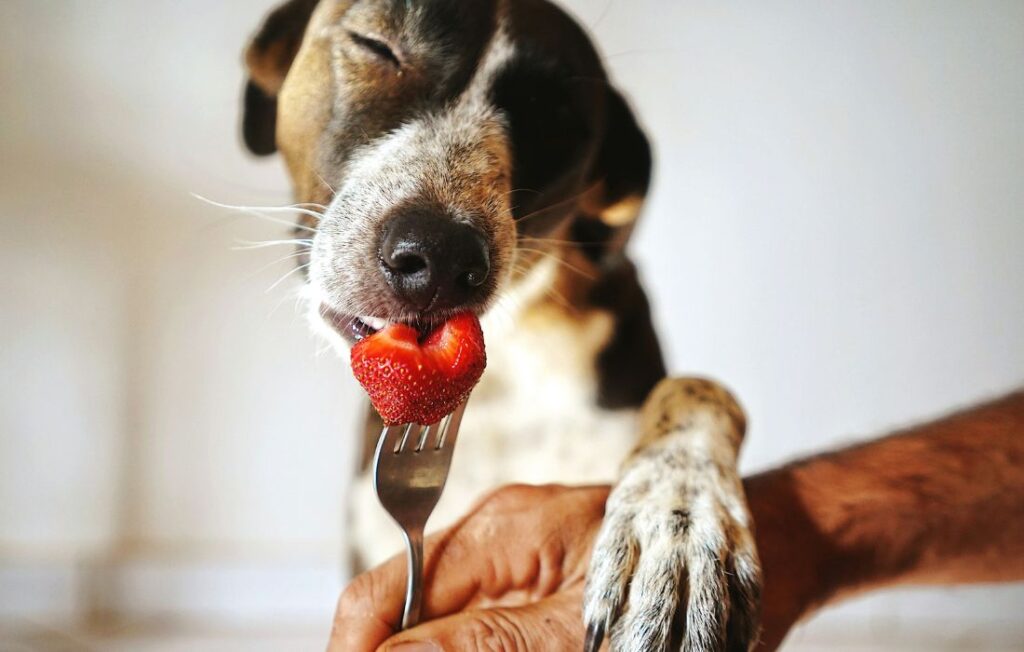
Strawberries can be a safe and enjoyable snack for puppies, but certain guidelines are crucial to protect their developing digestive systems. Puppies are more sensitive than adult dogs, so gradual introduction and proper preparation are key.
- Transition Gradually: Puppies need to fully transition to solid food before trying strawberries or other fruits. This typically occurs after 8-10 weeks of age, depending on their breed and growth stage.
- Start Small: Young dogs are more prone to digestive upset. Begin with just a tiny piece of strawberry, roughly the size of a pea, and wait 24 hours to monitor their reaction.
- Watch for Digestive Issues: It’s not uncommon for puppies to experience minor stomach upset when trying new foods. Symptoms like diarrhea or mild vomiting should prompt you to stop and consult your veterinarian.
- No Unnecessary Additives: Offer plain, fresh strawberries. Skip any sugar, cream, or processed strawberry products, as these can lead to a sugar overload or toxicity.
Puppies’ digestive systems are like a brand-new engine, they need high-quality and balanced fuel to run efficiently. Strawberries should always be a supplement to their regular puppy food and never a replacement. For a detailed look at what’s safe for your puppy, visit Fruits and Vegetables Dogs Can or Can’t Eat.
By introducing strawberries cautiously, you give your puppy the chance to enjoy this fruity snack without exposing them to unnecessary risks.
Strawberries as Part of a Balanced Diet
Fresh, juicy strawberries can be a delightful addition to your dog’s diet, but they should always complement their regular meals rather than replace them. Dogs thrive on a well-rounded diet specifically designed for their nutritional needs. While strawberries are rich in vitamins, fiber, and antioxidants, they lack the complete profile of nutrients found in a properly formulated dog food. Let’s explore the best way to approach strawberries in your dog’s diet while ensuring they remain happy, healthy, and well-fed.
Consulting a Vet

Before introducing any new food to your dog’s diet, it’s always wise to consult with your vet. This is especially important if your dog have unique health conditions or dietary restrictions. Your vet can assess your dog’s overall health and provide customized advice on whether strawberries are a good fit for them.
Here’s why consulting a vet matters:
- Personalized Guidance: Vets can identify how strawberries may interact with your dog’s current diet or medications.
- Managing Health Conditions: Dogs with diabetes, obesity, or specific food allergies require specialized guidance to avoid adverse reactions.
- Calorie Balance: A veterinary professional ensures that treats like strawberries don’t disrupt your pet’s calorie intake.
By seeking expert input, you can make informed decisions that prioritize your dog’s well-being. A veterinarian acts as your best resource in helping you navigate dietary changes and offering treats without compromising your dog’s health.
Wrapping Up
Strawberries can be a healthy and delicious treat for dogs, packed with vitamins, fiber, and other nutrients that support their overall wellness. However, safety comes first. Proper preparation, moderate portions, and awareness of your dog’s dietary needs are key. Always wash strawberries, remove stems and leaves, and introduce them gradually to avoid any potential issues.
Pet parents should stay vigilant for any adverse reactions and consult their vet if questions or concerns arise. By making informed choices, you can provide your pup with occasional fruity snacks that contribute to a happy and balanced lifestyle. What other dog-safe fruits might you explore next? Share your ideas in the comments!




Be the first to leave a comment