Halloween is a fun and exciting time for families, but it can also create unexpected dangers for dogs. From bowls of chocolate and sugar-free candy left within reach to uncomfortable costumes and constantly opening front doors, the holiday presents several risks that many pet owners overlook. While you’re enjoying trick-or-treaters, decorations, and festive celebrations, your dog may be exposed to hazards that could lead to illness, injury, or even a frightening escape.
The good news is that a few simple precautions can help keep your furry friend safe and stress-free throughout the festivities. In this guide, I’ll cover the most common Halloween dog safety concerns, including toxic candy, costume safety tips, and how to prevent door-dashing accidents, so you and your pup can enjoy a happy and safe Halloween together.
Halloween Candy Dangers: What Treats Are Toxic to Dogs?
The traditional Halloween candy bowl is arguably the biggest hazard in your home during the month of October. Dogs have an incredible sense of smell, and they know exactly when something delicious is sitting right at their nose level. While a piece of candy might seem like a harmless treat to share, many popular Halloween sweets contain ingredients that are highly toxic to dogs. Keeping these treats securely out of reach is the most critical step in protecting your pet.
Chocolate Toxicity and Xylitol Poisoning
When we think of dangerous Halloween treats, chocolate is usually the first thing that comes to mind. Chocolate contains theobromine and caffeine, both of which are methylxanthines. Dogs metabolize these substances much more slowly than humans do, allowing them to build up to toxic levels in their system.
The severity of chocolate toxicity depends on the type of chocolate, the amount ingested, and the size of the dog. Dark chocolate, semi-sweet chocolate, and baking chocolate contain much higher concentrations of theobromine than milk chocolate. Even a small amount of baking chocolate can be lethal to a small dog. Symptoms of chocolate poisoning include vomiting, diarrhea, rapid breathing, increased heart rate, seizures, and in severe cases, death.
However, chocolate is not the only sweet threat lurking in the candy bowl. Xylitol poisoning in dogs is an incredibly dangerous and often overlooked hazard. Xylitol is a sugar substitute commonly found in sugar-free gums, mints, baked goods, and even some brands of peanut butter. While safe for humans, xylitol causes a rapid and massive release of insulin in dogs. This leads to a sudden drop in blood sugar, known as hypoglycemia. If left untreated, xylitol ingestion can cause weakness, vomiting, loss of coordination, seizures, and acute liver failure within a matter of hours. Always check the ingredient labels on any peanut butter or sugar-free treats before giving them to your pet.
Hidden Hazards: Candy Wrappers, Raisins, and Hard Candies
While the candy itself is dangerous, the packaging poses a significant threat as well. Dogs do not unwrap their treats. If they get into the candy bowl, they will happily consume the foil, plastic, and cellophane wrappers along with the chocolate. Ingesting candy wrappers can lead to severe gastrointestinal distress and intestinal blockages. A blockage is a life-threatening medical emergency that often requires expensive surgical intervention to remove the foreign object.
Another hidden hazard found in many holiday treats is raisins and currants. These dried fruits are frequently mixed into trail mixes, baked goods, and specialty candies. Just like grapes, raisins can cause acute kidney failure in dogs. The exact toxic mechanism is still not fully understood by veterinarians, but even a small handful can be devastating to a dog’s renal system.
Finally, hard candies and lollipops present physical dangers. Hard candies can become choking hazards, especially for dogs that gulp their food without chewing. They can also crack a dog’s teeth if bitten down on too forcefully. Furthermore, the wooden or plastic sticks from lollipops can cause severe internal punctures if swallowed.
Emergency Steps: What to Do If Your Dog Eats Toxic Candy
Despite our best efforts, accidents happen. If you suspect your dog has ingested toxic candy, time is of the essence. The very first thing you should do is remain calm. Panicking will only stress your dog and make it harder to think clearly.
Do not attempt to induce vomiting at home unless specifically instructed to do so by a veterinary professional. Inducing vomiting incorrectly can cause aspiration pneumonia, and some substances can cause more damage coming back up the esophagus than going down. Furthermore, if your dog is already showing neurological symptoms like seizures, inducing vomiting is extremely dangerous.
Immediately call your veterinarian, the ASPCA Animal Poison Control Center, or the Pet Poison Helpline. Have the following information ready to provide to the expert on the phone:
The exact type of candy or substance ingested.
The estimated amount your dog ate.
The approximate weight of your dog.
Any symptoms your dog is currently displaying.
Keep the candy wrappers handy, as the vet will need to read the ingredient list to determine the exact concentration of toxins. Follow the professional’s instructions carefully and transport your dog to the emergency clinic immediately if advised to do so.
Halloween Costume Safety: How to Dress Your Dog Without Stress
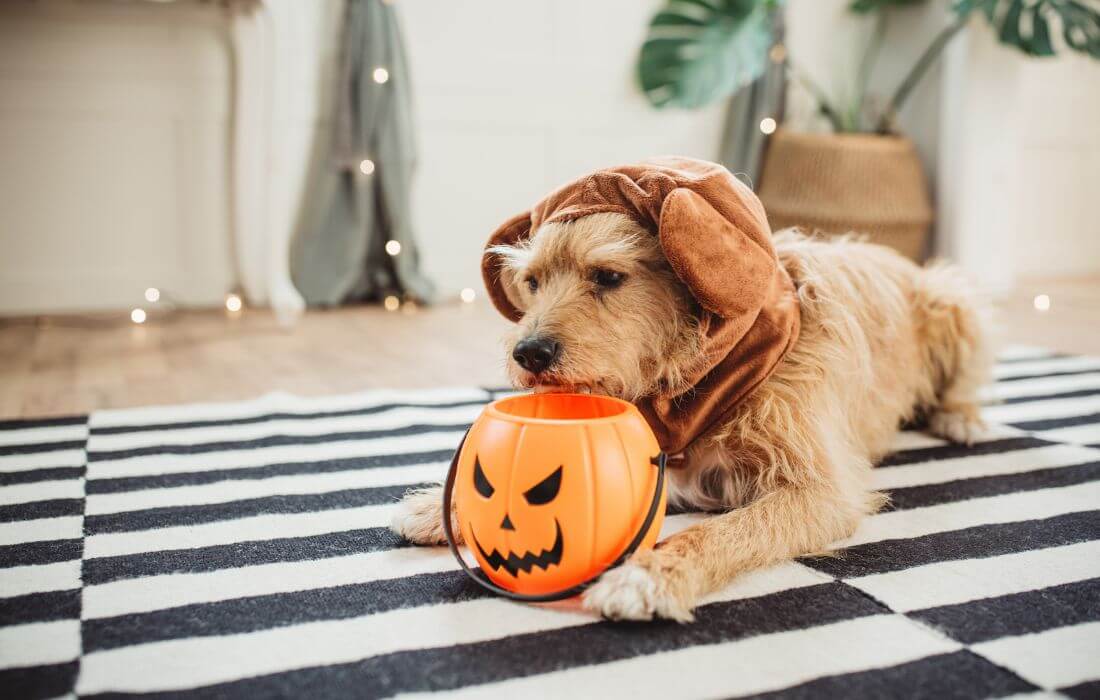
Dressing up your dog in a clever costume is a beloved Halloween tradition. From tiny pumpkins to fierce lions, the photo opportunities are endless. However, dog Halloween costume safety should always be your top priority. Not all dogs enjoy wearing clothes, and a poorly fitted outfit can cause physical discomfort or severe psychological stress.
Choosing a Safe, Comfortable Dog Halloween Costume
When selecting an outfit for your pup, comfort and mobility must come before cuteness. A safe costume should never restrict your dog’s natural movements. Ensure the outfit does not pull tightly around the neck, chest, or legs. Your dog must be able to walk, run, sit, pant, and relieve themselves without any hindrance.
Choose costumes made from breathable, lightweight fabrics. Dogs regulate their body temperature primarily by panting, and heavy or non-breathable materials can quickly lead to overheating, especially if your home is warm or if your dog is active.
Pay close attention to the small details of the costume. Avoid outfits with small, easily chewed-off parts like plastic buttons, sequins, bells, or loose elastic bands. If your dog manages to chew these pieces off and swallow them, it creates a serious choking or intestinal blockage hazard. Additionally, ensure the costume does not cover your dog’s eyes or ears. They need full use of their vision and hearing to feel secure in their environment.
Reading Your Dog’s Body Language: Signs of Costume Stress
Dogs cannot tell us when they are uncomfortable, so we must learn to read their body language. Many owners mistakenly believe that a dog who is completely still and quiet in a costume is “being good.” In reality, freezing is often a sign of extreme fear and stress.
Before Halloween night, do a test run with the costume a few days in advance. Put the outfit on your dog for just a few minutes and observe their reaction closely. Watch for these clear signs of costume stress:
Pinned back ears
A tucked tail or a stiff, high, and rigid tail
“Whale eye,” which is when your dog turns its head away but keeps its eyes on you, showing the whites of the eyes
Excessive panting or drooling when not hot
Repetitive yawning or lip licking
Pacing, trembling, or trying to hide
Freezing completely in place
If your dog displays any of these behaviors, take the costume off immediately. Forcing a terrified dog to wear an outfit will only increase their anxiety and could lead to defensive biting if they feel cornered.
The “No-Costume” Alternative: Festive Bandanas and Harnesses
If your dog hates wearing clothes, there is absolutely no need to force the issue. There are plenty of low-stress alternatives that allow your pet to participate in the holiday without the anxiety of a full outfit.
A festive Halloween bandana is a perfect compromise. It is lightweight, does not restrict movement, and is incredibly easy to put on and take off. You can also opt for a Halloween-themed bow tie that clips directly onto their existing collar. If your dog already wears a harness, you can purchase a festive harness cover that slips right over their everyday gear. These simple accessories keep your dog comfortable while still providing that perfect spooky photo opportunity for your social media feeds.
Preventing Dog Door-Dashing and Trick-or-Treater Anxiety
The front door on Halloween night is a chaotic zone. It opens and closes constantly, the doorbell rings endlessly, and a steady stream of strangers in masks and makeup walks right up to your house. For a dog, this is a recipe for high anxiety and a high risk of escape. Learning how to prevent dog door-dashing and manage this environmental stress is crucial for a peaceful evening.
Managing Open Doors and Escaping Dogs on Halloween Night
The most common Halloween pet tragedy is a dog slipping out the front door while it is propped open for trick-or-treaters. Once a dog is out in the dark, surrounded by loud noises and running children, they can easily become disoriented and bolt in panic.
To manage this risk, you need to create a physical barrier between your dog and the front entrance. The easiest solution is to confine your dog to a quiet, secure back room or a large crate away from the front door. If you want your dog to remain in the main living area, set up a sturdy baby gate or an indoor playpen well back from the entryway.
If you are handing out candy yourself, consider asking a family member or friend to stay in the back room with your dog. Provide them with a high-value, long-lasting chew toy, such as a Kong stuffed with frozen peanut butter or a bully stick. This will keep your dog happily occupied and distracted from the chaos happening at the front of the house.
Reducing Noise Anxiety from Doorbells and Strangers
The repetitive sound of the doorbell or loud knocking can send many dogs into a state of high alert or panic. Combine that noise with the sight of children dressed as monsters, and you have a highly stressful situation.
You can significantly reduce this noise anxiety by altering your trick-or-treating setup. Turn off your doorbell completely. Instead, place a highly visible sign on your door or gate that says “Please Knock” or “Ring Bell Disabled, Please Knock.” Even better, turn on your porch light and place a sign stating that the porch light means you are handing out candy. This eliminates the need for ringing or knocking altogether.
Inside the house, mask the outside noises by playing white noise, a fan, or calming classical music. You can also draw the curtains or close the blinds so your dog cannot see the strangers walking past the windows. If your dog is highly sensitive to noise, consider using a calming aid. A snug-fitting anxiety wrap, a pheromone diffuser plugged into the wall near their safe space, or vet-approved calming treats can help take the edge off their nerves.
The Importance of Updated ID Tags and Microchips for Lost Pets
Even with the best prevention strategies, accidents can happen. A gate might get left unlatched, or a dog might slip past a distracted guest. If your dog does manage to escape, you need to ensure they can be quickly identified and returned to you.
Check your dog’s collar today to ensure the pet ID tags are securely attached. Verify that the phone number engraved on the tag is your current mobile number. If the tag is faded or scratched, order a replacement immediately.
Furthermore, ensure your dog’s microchip information is up to date. A microchip is useless if the registry database has your old address or an old phone number. Log into your microchip registry’s website today and confirm that your current contact information is accurately listed. This simple step drastically increases the chances of a happy reunion if your dog gets lost on Halloween night.
Halloween Decorations and Pet Hazards
Decorating the house is one of the best parts of the season, but those festive additions can introduce new hazards into your home. From glowing lights to fake cobwebs, you must pet-proof your decorations to keep your curious canine safe.
Keeping Dogs Safe from Candles, Glow Sticks, and Electrical Cords
Traditional jack-o’-lanterns lit with real candles pose a significant fire hazard. A wagging tail can easily knock over a pumpkin, or a curious nose can get too close to the flame, resulting in severe burns to the snout or paws. Always opt for battery-operated LED candles. They provide the exact same spooky glow without any of the fire or burn risks.
Glow sticks and glow jewelry are popular Halloween accessories, but they are not safe for pets to chew on. While the liquid inside glow sticks is not highly toxic, it tastes incredibly bitter. If a dog bites into one, the liquid will cause intense irritation to their mouth and throat. This results in severe, excessive drooling, foaming at the mouth, and frantic pacing as they try to get the taste out. If this happens, offer your dog water, milk, or a small amount of tuna juice to help wash the bitter liquid away, and wipe their face clean with a damp cloth.
Finally, be mindful of electrical cords used for animated outdoor and indoor decorations. Dogs, especially puppies, love to chew on cords, which can lead to fatal electrocution. Tape all cords securely to the baseboards, hide them behind heavy furniture, or use cord concealers to keep them completely out of reach.
Are Pumpkins and Fall Decor Safe for Dogs to Chew?
Many owners wonder if fall decorations are safe if their dog decides to take a bite. Plain pumpkin can be safe for dogs and may support digestive health when fed in small amounts.. However, you must keep your dog away from decorative pumpkins that have been sitting out.
Once a pumpkin is carved and left on a porch, it quickly begins to rot and grow mold. This mold can contain tremorgenic mycotoxins, which are highly toxic to dogs and cats. Ingesting moldy pumpkin can cause severe neurological symptoms, including tremors and seizures. Keep all rotting fall decor securely thrown away in a lidded trash can.
Similarly, be cautious with fake spiderwebs. While they look great draped over mantels and banisters, the synthetic material can easily be torn off and swallowed. These strings do not digest and can cause severe choking or linear intestinal blockages, which are medical emergencies. If you use fake webs, place them strictly in areas your dog cannot access, or skip them entirely in favor of pet-safe decorations.
Wrapping Up
Halloween should be a time of fun, treats, and festive memories for the entire family, including your four-legged members. Understanding and mitigating the risks, can help protect your pet from the hidden dangers of the season. Remember the three main pillars of Halloween dog safety: keep toxic candy and wrappers strictly out of reach, prioritize your dog’s comfort over costume cuteness, and secure your home to prevent door-dashing and anxiety.
Most importantly, always listen to your dog. If the holiday is too overwhelming for them, it is perfectly okay to skip the festivities. Put them in a quiet room with their favorite toys, close the curtains, and just enjoy a peaceful evening cuddling on the couch. Their safety and comfort must always come first.
How is your dog spending Halloween this year? Do you have a favorite pet-safe costume, or do you prefer to keep them in their everyday collar? Share your trick-or-treating tips and pet-safe ideas in the comments below!







Be the first to leave a comment