As the leaves change color and the air gets crisp, you might notice something else happening in your living room: your dog is shedding. And not just a little, we’re talking tumbleweeds of fur drifting across your hardwood floors.
If you own a fluffy companion like a Golden Retriever, Husky, German Shepherd, or Bernese Mountain Dog, you are witnessing the “Fall Coat Blow.” While many people think dogs only shed in spring, fall is actually the second major shedding season of the year. Your dog isn’t losing fur to stay cool for summer; they are getting rid of their lighter summer undercoat to make room for a thick, dense winter coat.
But here is the catch: if you don’t groom them correctly right now, you could ruin their natural insulation, cause painful mats, or even damage their coat permanently.
This comprehensive Fall Dog Grooming Guide will walk you through everything you need to know to prep for double coat season. We’ll cover the best tools, step-by-step bathing techniques, nutrition tips, and the one cardinal rule you must never break (hint: put down the clippers!).
Why Fall Dog Grooming Is Crucial for Double-Coated Breeds
Before we grab the brushes, we need to understand the science under all that fluff.
Understanding the Double Coat Structure
Double-coated breeds are built for survival. They have two distinct layers of hair:
The Undercoat: This is the soft, fluffy layer closest to the skin. Its job is to trap air, keeping the dog warm in winter and cool in summer (it acts like the insulation in your house).
The Guard Hairs (Topcoat): This is the longer, coarser outer layer. It repels water, blocks UV rays, and protects against dirt and debris .
Why “Fall Shedding” Happens
You might think dogs grow their winter coat because they are cold. Actually, it is triggered by the change in daylight, not temperature. As the days get shorter, a signal is sent to your dog’s body to prepare for winter.
They release the summer undercoat (the thin stuff) so the dense, plush winter undercoat can grow in. If that dead summer hair gets trapped under the new winter hair, it creates a dense, felted mat that traps moisture and bacteria against the skin .
The Golden Rule of Fall: You aren’t just brushing away dirt; you are physically removing the “dead” layer to make space for the “alive” winter layer.
The Ultimate Fall Dog Grooming Schedule
You can’t just brush your dog once in October and call it a day. You need a rhythm. Here is a timeline to follow for a smooth transition.
Weeks 1–2: Heavy Undercoat Removal Phase
This is when the “blow” is at its peak. You need to be aggressive (but gentle).
Frequency: Brush every day. If you brush for 10 minutes and hair is still coming out, brush for another 10 minutes.
Goal: To see a noticeable reduction in loose hair when you pet your dog.
Weeks 3–4: Maintenance & Skin Health
The massive clumps of shedding should be slowing down.
Frequency: 3–4 times per week.
Goal: Focus on the “pants” (hind legs) and chest where mats hide.
Late Fall: Final Prep for Winter
The new coat should look plush and even.
Focus: Paw pad care. If hair grows over the paw pads, it collects ice, salt, and snow. Trim it flush with the pad.
Nails: Keep them short. Long nails change the angle of the paw on slippery winter ice.
Best Tools for Fall Double Coat Grooming
If you are using the same brush you bought for your short-haired Chihuahua, you are fighting a losing battle. You need the right artillery for a double coat.
The “Big Three” Tools You Need
The Undercoat Rake (Non-Bladed): This is your MVP. It has long steel teeth that reach through the topcoat to pull the loose undercoat without cutting the guard hairs. Look for rotating pins to prevent snagging.
The Slicker Brush: Use this for the topcoat and finishing. It removes loose guard hairs and surface dirt. Get one with “bent wire pins” (often coated with rubber tips) to avoid scratching the skin.
The High-Velocity Dryer (HV Dryer): This is a game-changer. While expensive for home use, you can find them for rent or buy a pet-specific dryer. These blow the dead undercoat out physically, reducing brushing time by half .
What to Avoid
Never use a “Furminator” style de-shedding tool as your primary brush. While effective, if used too aggressively or too often, the built-in blade will cut and damage the guard hairs (the topcoat). Use a rake first, then use a de-shedding tool sparingly.
Step-by-Step Fall Dog Bathing & Drying Guide
You should NOT bathe your dog at the start of the shedding season. Always brush before you bathe. Water will make existing mats tighter and harder to remove .
Here is the pro-approved fall bathing protocol:
Step 1: The Pre-Bath Brute Force
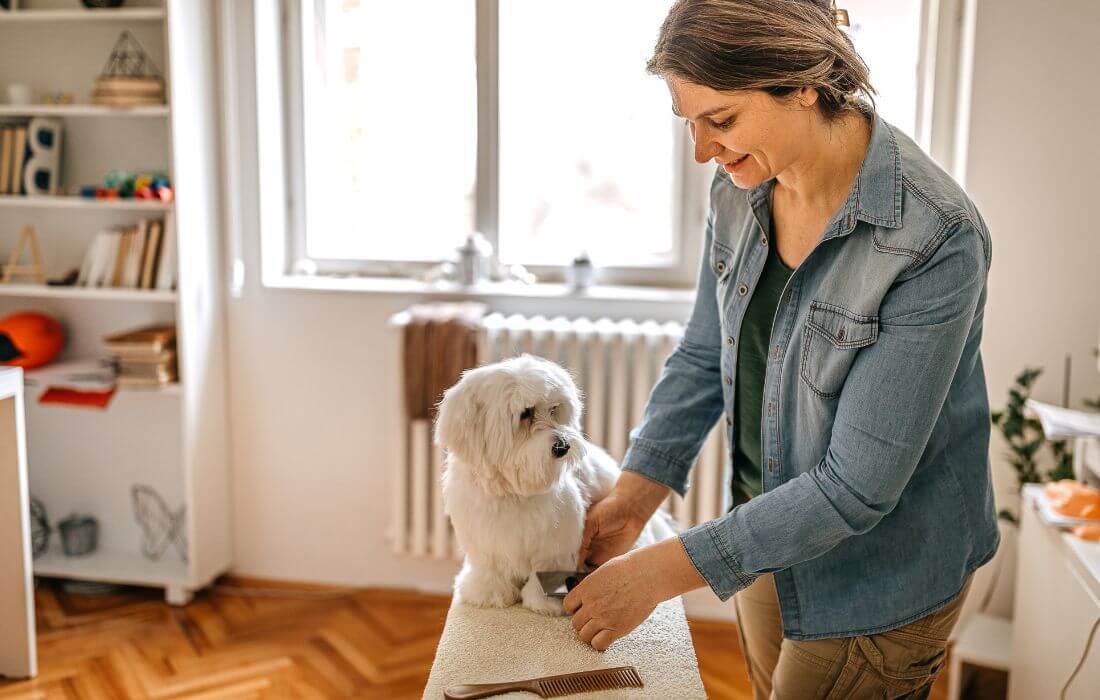
Take your dog outside or to a groom room. Use your undercoat rake and slicker brush to remove as much loose fur as physically possible.
Step 2: The “Deshed” Bath
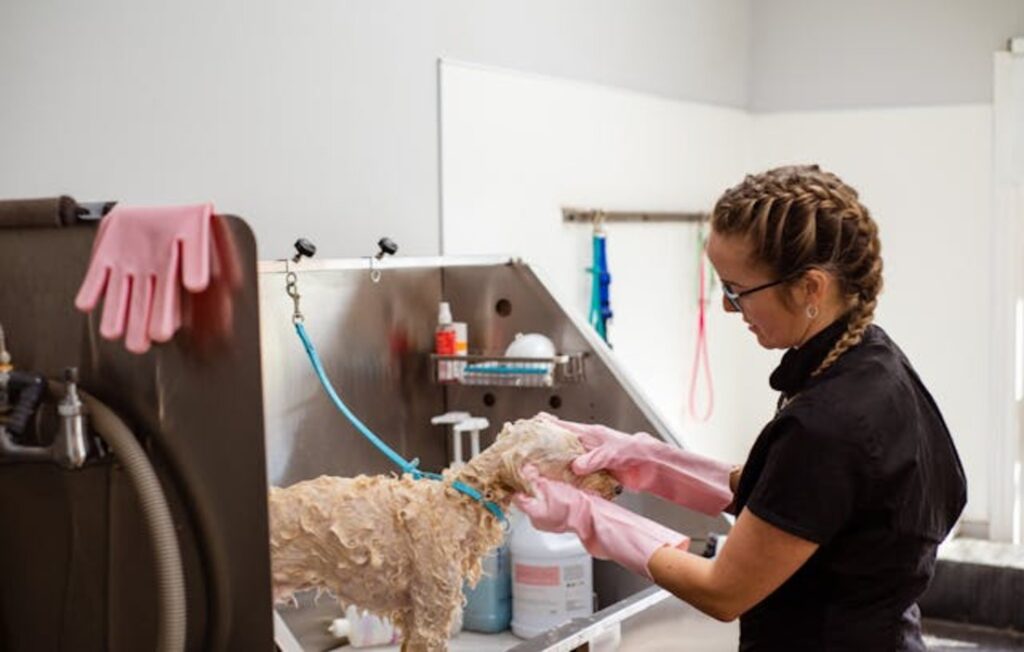
Shampoo: Use a high-quality deshedding shampoo. These usually contain Omega fatty acids and moisturizers that hydrate the skin and loosen the grip of the dead hairs.
Conditioner:Do not skip this. Conditioner smooths the hair shaft and adds slip, making the dead undercoat slide out easily. Leave it on for 5 minutes .
Step 3: The High-Velocity Dry
This is the most critical step for a double coat.
Towel dry your dog lightly.
Turn on your HV dryer. Point it against the direction of hair growth.
Watch the magic happen. Literal clouds of undercoat will fly out of the dog, usually landing on your walls and face (wear goggles!).
Continue until the coat is 100% dry. Damp undercoat is a breeding ground for bacteria and hotspots.
Step 4: The Final Line-Brush
Once dry, do a “line brushing” session. Part the hair down to the skin using a metal comb. Brush small sections until the comb glides through with no resistance . If you hit a snag, spray with a detangling spray and work it out gently.
Managing Fall Shedding: Reduce Fur in Your Home
Even with the best grooming, fall is messy. Here is how to live with it using modern science.
Nutrition for a “Healthy Blow”
You cannot stop shedding, but you can make the hair stronger so it doesn’t break off into tiny pieces, and you can soothe the skin so it releases hair predictably.
Omega-3 Fatty Acids: Look for fish oil supplements (EPA/DHA). These improve the skin barrier. A healthy skin barrier = a clean shed. *Always consult your vet for the right dosage, but generally, 8-12 weeks of supplementation is needed to see changes* .
Environmental Hacks
The “20-Minute” Dryer Trick: Throw your dog’s bedding and your rugs into the dryer on “Air Fluff” (no heat) for 10 minutes before washing. The static and tumbling will pull the hair into the lint trap, saving your washing machine.
Robot Vacuums: Run them daily. A double coat blow can clog a standard vacuum in minutes. A robot keeps the surface level down.
Static Spray: In the dry fall air, static makes hair stick to everything. Spray your furniture lightly with anti-static spray or dilute fabric softener in water, or spray a leave-in dog conditioner on your dog’s coat to weigh down the flyaways .
Common Fall Grooming Mistakes to Avoid
Even well-meaning owners make mistakes that can cost hundreds in vet bills.
Mistake #1: Shaving the Double Coat
We cannot stress this enough: Do not shave your Husky, Golden, or German Shepherd in the fall.
The Myth: “It will grow back by winter.”
The Reality: Shaving destroys the coat’s ability to regulate temperature. The topcoat (guard hairs) grows back very slowly, sometimes taking years or never returning to normal. The undercoat grows back fast, creating a patchy, fuzzy mess that actually mats more easily and does not insulate properly . It also removes the UV protection, risking sunburn even in winter.
Mistake #2: Bathing Without Brushing
If you wet a matted coat, it dries tighter and tighter against the skin, cutting off circulation and causing “fungal mats” (hotspots). Brush first, bathe second.
Mistake #3: Ignoring the “Hidden” Spots
While brushing the back is easy, dogs get matted in the friction zones:
Armpits: Harnesses rub here.
Behind the Ears: Saliva and scratching cause mats.
The HV Dryer: Professional dryers are industrial strength. One session with a pro dryer can remove 70% of the dead undercoat that a brush misses .
The “Hydro Massage”: Some salons offer hydro massage baths. The warm pulsing water lifts dead undercoat from the deepest layers and stimulates circulation for senior dogs or those with dry skin .
How Often?
The “Tumbleweed Rule”: If you see tumbleweeds of fur in your kitchen, book a deshed appointment immediately.
The Schedule: A solid routine is a professional deep deshed treatment in late September and another in late November . In between, you maintain with home brushing.
Frequently Asked Questions
Can I use human shampoo on my double-coated dog in the fall? No. Human shampoo has a different pH balance than dog skin (humans are acidic, dogs are neutral to alkaline). Human shampoo strips the natural oils from the guard hairs, causing the coat to become brittle and static-prone, making fall shedding worse.
Why is my dog itching so much in the fall even though they don’t have fleas? It could be “dry skin” from the heater running in the house, or fall allergies. Also, if the dead undercoat is trapped against the skin, it acts like a wool sweater on bare skin—itchy! A thorough deshed bath usually solves the itch within 24 hours.
How long does the fall shedding “blow” last? Typically 2 to 4 weeks. For heavy-coated giants like Malamutes or Bernese Mountain Dogs, it can last up to 6 weeks. If your dog has been shedding heavily for 3 months, it might be a medical issue (like thyroid problems) rather than a seasonal shed.
Is it okay to trim my dog’s hair with scissors for a “neater” look? Trimming is fine! You can tidy up the “feathers” on the legs, the belly, and the sanitary areas. However, avoid using clippers with a blade shorter than a #10 (usually leaving 1/16th of an inch), as this cuts the guard hairs. Scissor work is safe for the topcoat.
Wrapping It Up
Fall is a stressful time for your dog’s coat. The summer light coat is dying, and the heavy winter armor is trying to grow in. If those two layers collide, you get matting, skin irritation, and a very uncomfortable pup.
By following this Fall Dog Grooming Guide, you aren’t just keeping your house cleaner; you are actively contributing to your dog’s health. You are allowing their skin to breathe, their new winter coat to grow in straight and strong, and their natural thermostat to work properly.
So, grab that undercoat rake, order those Omega-3 supplements, and put the electric clippers away.







Be the first to leave a comment