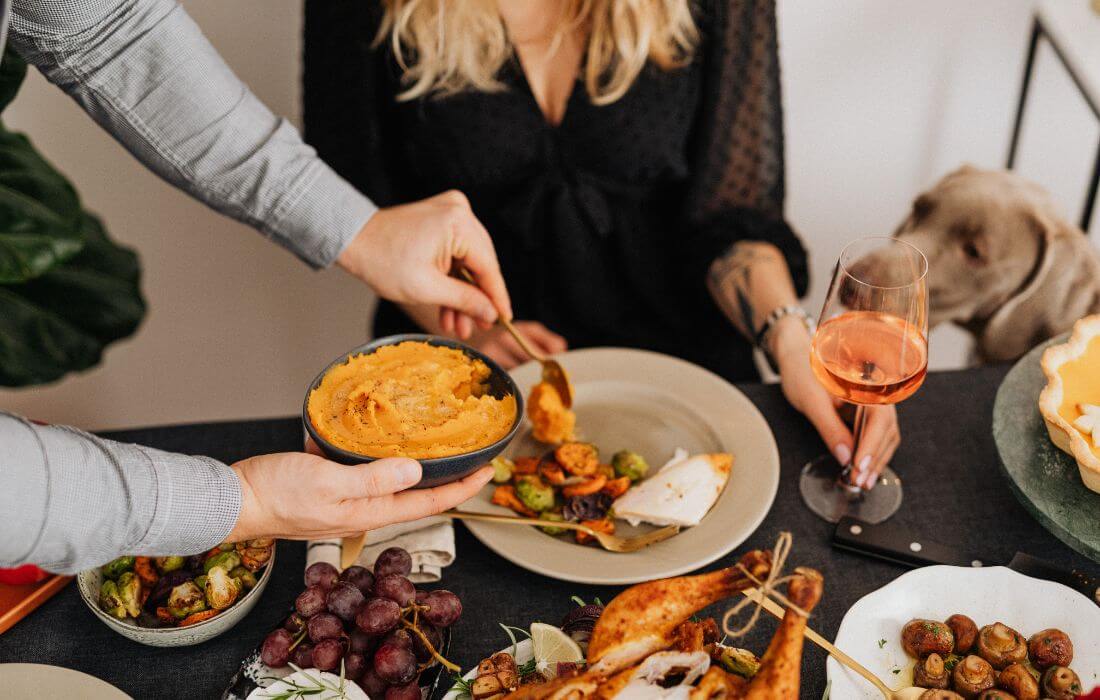
Thanksgiving is a wonderful time to gather with family, share gratitude, and enjoy. For those of us who share our homes with dogs, the holiday also means dealing with those irresistible puppy dog eyes. As you sit down to eat, your furry best friend is likely parked right next to your chair, hoping you will drop a piece of turkey or a stray green bean.
While it is tempting to share your holiday meal with your pup, the Thanksgiving dinner table is actually full of hidden hazards. Many traditional side dishes, seasonings, and scraps contain ingredients that are highly toxic to dogs. A single bite of the wrong food can lead to an upset stomach, a trip to the emergency vet, or even life-threatening complications.
You don’t have to exclude your pup from the holiday fun, though. You just need to know what is safe to share. This comprehensive guide breaks down exactly which Thanksgiving foods dogs can eat safely, which ones are strictly off-limits, and how to create a delicious, dog-friendly holiday plate.
Safe Thanksgiving Foods Dogs Can Eat
When it comes to sharing human food with your dog, the golden rule is to keep it plain, unseasoned, and fully cooked. If you stick to these simple guidelines, there are plenty of Thanksgiving staples your dog can safely enjoy.
Plain Turkey and Poultry: How to Serve It Safely
Turkey is the star of the show, and yes, your dog can have a little bit. Plain, unseasoned, fully cooked white meat turkey is perfectly safe for dogs. In fact, it is an excellent source of lean protein and riboflavin, which are great for their overall health.
When sharing turkey with your dog, you must remove the skin and ensure there are absolutely no bones left in the meat. Dark meat turkey is also safe in very small amounts, but it is much higher in fat than white meat. Too much fat can upset your dog’s stomach, so stick to the lean white breast meat whenever possible. Always serve the turkey plain. Do not add any salt, pepper, butter, or gravy.
Dog-Friendly Vegetables: Sweet Potatoes, Green Beans, and Carrots
Vegetables are a fantastic, low-calorie treat for dogs, and Thanksgiving offers some of the best options. Sweet potatoes, green beans, and carrots are all highly nutritious and safe for your pup.
Sweet potatoes are packed with fiber, vitamins, and minerals. You can serve them to your dog baked or boiled, but they must be completely plain. Do not add butter, brown sugar, or marshmallows. Green beans are another excellent choice. You can serve them fresh, steamed, or even canned, provided you choose a low-sodium variety and rinse them well before serving. Carrots are great too. You can give them raw for a crunchy treat that helps clean your dog’s teeth, or cooked and mashed for easier digestion.
Safe Carbs and Grains: Plain Rice, Oatmeal, and Pumpkin
If your dog loves carbohydrates, you can safely share a few bites of plain rice or oatmeal. Both are easily digestible and often used to settle an upset stomach. Make sure the oatmeal is cooked in water rather than milk, as many dogs are lactose intolerant. Skip the brown sugar and cinnamon, and serve it completely plain.
Pumpkin is a Thanksgiving superfood for dogs. It is incredibly high in fiber and great for digestive health. However, you must be very careful about which type of pumpkin you choose. You can only feed your dog 100 percent pure canned pumpkin puree. You must never feed them pumpkin pie filling. Pie filling is loaded with sugar, spices, and sometimes artificial sweeteners that are dangerous for dogs. Always check the ingredient list to ensure the only ingredient is pumpkin.
Toxic Thanksgiving Foods Dogs Can’t Eat
While there are safe options, the list of dangerous foods is much longer. Many of our favorite holiday dishes contain ingredients that can cause severe health issues for dogs. Keep these items far away from your pet.
The Hidden Dangers of Turkey Bones, Skin, and Gravy
It is a common myth that dogs can safely eat cooked bones. In reality, cooked poultry bones are extremely dangerous. When a dog chews on a cooked turkey bone, the bone becomes brittle and splinters easily. These sharp shards can cause choking, puncture the dog’s esophagus, or tear their intestinal tract. Always throw turkey bones directly into a secure trash can where your dog cannot reach them.
Turkey skin and gravy are also major hazards. Both are incredibly high in fat. While a little bit of fat is fine, a sudden influx of rich, fatty foods can trigger pancreatitis in dogs. Pancreatitis is a painful and potentially fatal inflammation of the pancreas. Symptoms include severe vomiting, diarrhea, lethargy, and a hunched back from abdominal pain. Keep the skin on your plate and the gravy in the bowl.
Alliums and Seasonings: Garlic, Onions, and Chives
The Allium family, which includes garlic, onions, leeks, and chives, is highly toxic to dogs. These ingredients contain compounds that destroy a dog’s red blood cells, leading to a dangerous condition called hemolytic anemia.
While a tiny, accidental taste of onion might not cause immediate harm, regular or large consumption is very dangerous. The tricky part of Allium toxicity is that these ingredients are hidden in almost everything. They are heavily used in stuffing, casseroles, soups, and marinades. Even onion or garlic powder is dangerous. When preparing your dog’s holiday plate, ensure absolutely no alliums have touched their food.
Sugary, Fatty, and Dairy-Rich Side Dishes
We love our rich, creamy side dishes, but a dog’s digestive system is not built to handle them. Mashed potatoes are a perfect example. While a plain boiled potato is fine, the mashed version is typically loaded with butter, heavy cream, sour cream, and salt. This rich combination is a fast track to an upset stomach and weight gain.
Candied yams are equally dangerous. They are covered in brown sugar, butter, and sometimes nutmeg. Nutmeg contains a compound called myristicin, which can cause hallucinations, increased heart rate, and seizures in dogs. Similarly, avoid sharing macaroni and cheese, creamy casseroles, and any dish loaded with heavy dairy. Most dogs lack the enzyme to properly break down lactose, which will almost certainly result in gas and diarrhea.
Desserts and Nuts: Xylitol, Grapes, Raisins, and Macadamia Nuts
Dessert is where many pet owners accidentally put their dogs in danger. The biggest threat in holiday baking is xylitol, sometimes listed as birch sugar. This artificial sweetener is often used in sugar-free pies, cookies, and candies. Even a tiny amount of xylitol causes a rapid, massive release of insulin in dogs, leading to severe hypoglycemia (low blood sugar) and acute liver failure. Always check labels and keep all baked goods out of reach.
Grapes and raisins are another major hazard. While the exact toxic mechanism is still being studied, veterinarians know that grapes and raisins can cause sudden and irreversible kidney failure in dogs. This includes raisins baked into breads, cookies, and stuffing.
Finally, keep the nut tray away from your pup. Macadamia nuts are highly toxic to dogs and can cause weakness, vomiting, tremors, and hyperthermia. Walnuts and pecans can also cause stomach upset and harbor toxic molds. Stick to dog-specific treats for dessert.
How to Create a Dog-Friendly Thanksgiving Plate
You want your dog to feel included in the celebration without compromising their health. Creating a special Thanksgiving plate for your dog is a great way to do this.
Portion Control and Caloric Intake for Dogs
When sharing human food, portion control is critical. Vets usually recommend the 10 percent rule. This means that treats and human food should never make up more than 10 percent of your dog’s total daily caloric intake. The other 90 percent should come from their regular, nutritionally complete dog food.
Overfeeding your dog with holiday scraps can lead to rapid weight gain and nutritional imbalances. It can also cause an upset stomach simply because their digestive system is not used to the sudden change in diet. Start with very small portions. A tablespoon of plain turkey and a few green beans is plenty for a medium-sized dog. If your dog is small, scale the portions down even further.
Simple DIY Dog-Friendly Thanksgiving Recipes
If you want to go the extra mile, you can make a few simple, dog-safe recipes right in your own kitchen. These treats use the safe ingredients we discussed earlier and will make your dog feel like they are getting a special feast.
Recipe 1: Turkey and Pumpkin Meatballs This is a savory, protein-packed treat that mimics the flavors of the holiday without the dangerous fats.
Ingredients: 1 cup of plain, cooked, and shredded white meat turkey; 1/2 cup of 100 percent pure canned pumpkin puree; 1/2 cup of oat flour (you can make this by blending plain oats).
Instructions: Preheat your oven to 350 degrees Fahrenheit. In a mixing bowl, combine the shredded turkey, pumpkin puree, and oat flour. Mix until it forms a sticky dough. Roll the mixture into small, bite-sized meatballs. Place them on a baking sheet lined with parchment paper. Bake for 15 to 20 minutes, or until they are firm. Let them cool completely before serving them to your dog. Store any leftovers in the refrigerator for up to three days.
Recipe 2: Frozen Yogurt and Blueberry Pup-Sicles If you need a palate cleanser after the big meal, these frozen treats are refreshing and safe.
Ingredients: 1 cup of plain, unsweetened Greek yogurt (ensure it contains no xylitol); 1/2 cup of fresh or frozen blueberries.
Instructions: Place a few blueberries into the bottom of each compartment of an ice cube tray or a silicone paw-print mold. Pour the plain Greek yogurt over the berries, filling the compartments almost to the top. Place the tray in the freezer for at least three hours, or until completely solid. Pop out the frozen treats and serve them to your dog as a cool, crunchy dessert.
Thanksgiving Pet Safety Tips Beyond the Dinner Table
Food is not the only hazard during the holidays. The chaotic environment of Thanksgiving can create other risks for your furry family members. Taking a few preventative steps will ensure the day goes smoothly for everyone.
Dog-Proofing the Trash and Food Scraps
The kitchen trash can is a goldmine of dangerous items on Thanksgiving. Discarded turkey bones, aluminum foil, corn cobs, and fatty meat scraps are all major choking and intestinal blockage hazards. If your dog manages to get into the trash, they could easily swallow something that requires emergency surgery to remove.
To prevent this, use a trash can with a heavy, locking lid. If your dog is a known counter-surfer, keep the trash can inside a closed pantry or cabinet during the holiday. Alternatively, take the trash out frequently throughout the day so it never gets full enough to be tempting. Never leave plates of food unattended on low coffee tables or accessible counters.
Managing Dog Anxiety and Stress with Houseguests
Thanksgiving means a house full of people, loud conversations, and constant activity. While you might love the hustle and bustle, your dog could find it incredibly overwhelming. Dogs thrive on routine, and a holiday completely disrupts their normal schedule.
To help your dog manage their stress, create a designated “safe zone” in a quiet bedroom or a secluded corner of the house. Set up their bed, provide their favorite blanket, and leave some water nearby. Give them a high-value chew toy or a puzzle feeder filled with peanut butter (xylitol-free) to keep them occupied and relaxed.
If your dog is highly anxious around strangers, do not force them to interact with guests. Let them retreat to their safe zone when they need a break. You can also use a white noise machine or play soft classical music in their room to help drown out the loud noises from the main living areas. Remind your guests, especially children, to let the dog rest if they walk away to their safe space.
Frequently Asked Questions
Even with a comprehensive guide, specific questions always come up. Here are the answers to the most common questions pet owners ask about Thanksgiving foods.
Can dogs eat cranberry sauce?
No, you should not feed cranberry sauce to your dog. While plain, fresh cranberries are safe in very small amounts, cranberry sauce is a completely different story. Commercial cranberry sauces are loaded with sugar, which can cause stomach upset and contribute to obesity. More importantly, some sugar-free cranberry sauces contain xylitol, which is highly toxic. Even homemade cranberry sauce usually contains too much sugar and sometimes includes citrus or nuts, which are not ideal for dogs. Stick to plain green beans or carrots instead.
Can dogs eat corn on the cob?
No, dogs should never eat corn on the cob. While plain, cooked corn kernels cut off the cob are perfectly safe and even found in many commercial dog foods, the cob itself is a massive hazard. Dogs cannot digest corn cobs. If they chew off and swallow a piece of the cob, it can easily become lodged in their throat, causing choking. If it makes it past the throat, it frequently causes a severe intestinal blockage that requires emergency surgery. Always keep corn cobs securely in the trash.
What should I do if my dog eats something toxic?
If you suspect your dog has eaten a toxic food, time is of the essence. Do not wait for symptoms to appear. Immediately call your veterinarian, the nearest emergency veterinary clinic, or the ASPCA Animal Poison Control Center at 888-426-4435.
Have the following information ready: the exact food your dog ate, the approximate amount they consumed, the time they ate it, and your dog’s current weight and any symptoms they are showing. Do not attempt to induce vomiting or give your dog any home remedies unless a vet explicitly instructs you to do so.
Wrapping It Up
Thanksgiving is a beautiful holiday centered around gratitude, family, and sharing. While it is natural to want to share your feast with your dog, keeping human food strictly to the safe list is the best way to show them you care. A little bit of plain turkey, some steamed green beans, and a spoonful of pure pumpkin are all your pup needs to feel included in the celebration.
Avoiding toxic ingredients like onions, rich gravies, and artificial sweeteners, you can prevent emergency vet visits and ensure your dog stays healthy and happy. Remember to practice portion control, dog-proof your trash, and give your pup a quiet place to retreat when the holiday gets too loud.







Be the first to leave a comment