


Flying With Fido: A Dog Mom’s Guide to Air Travel

Whether you’re planning your first big adventure with your dog or you’re a seasoned traveler who refuses to leave your best friend behind, flying with your pup can feel like a mix of excitement and anxiety. As a dog mom myself, I get it, the thought of navigating airport lines, airline policies, and cramped cabin spaces while keeping Fido comfortable is no small feat!
But with some planning, patience, and insider know‑how, flying with your dog doesn’t have to be stressful. This guide breaks down everything you need to know, from airline rules to packing checklists, so you and your furry co‑pilot can enjoy smooth skies from takeoff to touchdown.
Understanding Airline Pet Policies
Before you book your ticket, it matters to understand the specific pet policies of the airline you’ll be flying with. Each carrier has its own set of rules for pet-friendly flights, including size limits, carrier requirements, and fees.
In‑cabin vs. cargo travel:
Most small dogs can fly in the cabin if they fit comfortably in a ventilated soft-sided carrier that can slide under the seat in front of you. Typically, your dog must weigh between 15–20 pounds (including the carrier). Larger dogs, unfortunately, may need to fly in the airline’s cargo hold, which is temperature‑regulated but can still be stressful for pets.
Major airline comparisons:
- Delta Air Lines: Allows small dogs in the cabin on most flights, with a $125 one‑way pet fee.
- American Airlines: Similar rules and fees, though restrictions vary for international or long‑haul routes.
- Southwest Airlines: Offers in‑cabin travel only, with an affordable pet fare and designated pet carriers available for purchase.
- United Airlines: Operates PetSafe cargo options but limits certain breeds for safety reasons.
Be sure to check your airline’s website under “Travelling with Pets” for the most current details, since policies change frequently.
Preparing Your Dog for the Flight
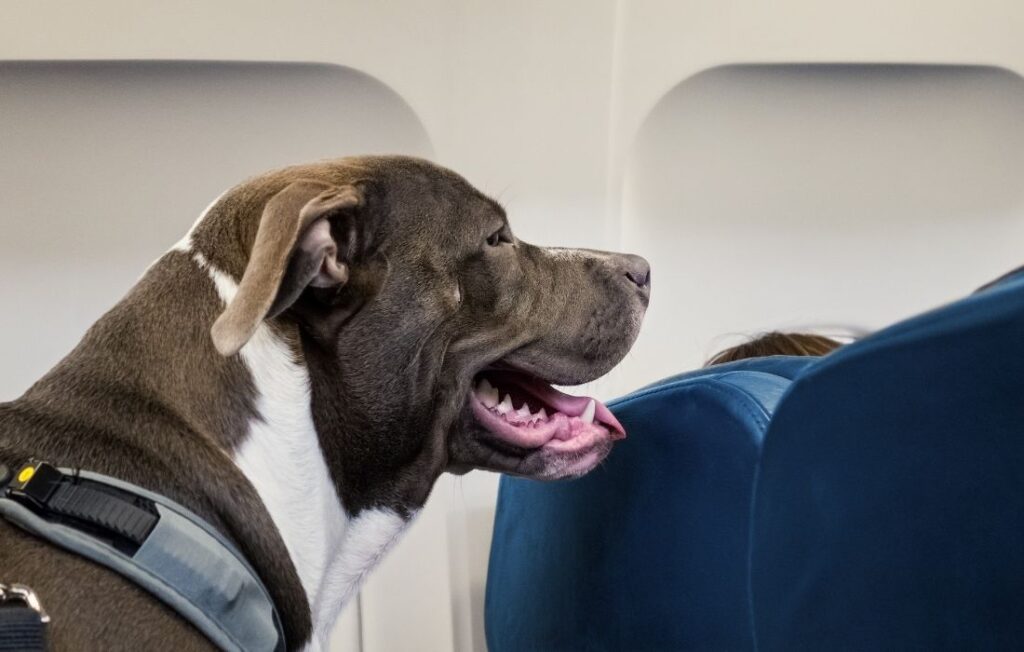
Your dog might love a car ride, but a flight is a completely different experience. Loud sounds, new smells, and long stretches of confinement can make even the calmest pups uneasy. That’s why preparation is key to a smooth travel.
Crate training matters:
Use your airline-approved carrier at home for a few weeks before your trip. Let your dog eat, nap, or play near and inside it so the carrier feels safe and familiar. Toss in a soft blanket or a favorite toy to build positive associations.
Visit your vet:
Schedule a health check 7–10 days before your flight. Most airlines require a health certificate for pets traveling by air, especially for cargo or international flights. Ask your vet about vaccinations, deworming, flea treatments, and motion‑sickness remedies if your dog gets queasy.
Practice short trips:
Take your dog for a few car rides while securely inside the carrier. This helps them adjust to motion and limited space in preparation for the flight experience.
Booking the Perfect Flight for Your Pup
When traveling with your canine companion, timing and route selection can make a huge difference in comfort and safety.
Choose direct flights:
Try to avoid layovers whenever possible. Each transfer adds stress and the potential for delays, missed connections, or exposure to harsh temperatures on the tarmac. A direct route minimizes time in transit and keeps your pet nearby.
Pick your time wisely:
For summer trips, book early‑morning or late‑evening departures to avoid midday heat. In winter, aim for midday flights when temperatures are milder. Airlines often restrict cargo travel during extreme weather conditions, so season and time matter.
Costs and fees:
Expect to pay around $100–$150 for an in‑cabin pet fee (each way). Cargo costs vary based on weight and route, and they can range from $400 to over $1,000. Some frequent flyers use airline credit cards or reward points that can help offset pet fees.
Pro tip: Always book your dog’s spot early. Airlines limit the number of pets per flight, usually around 4–6 per cabin.
Packing Fido’s Flight Essentials

Staying organized will make travel day less chaotic. A dedicated dog travel bag ensures you have everything at hand.
Complete dog travel checklist:
- Airline‑approved carrier (soft, leakproof, ventilated)
- Collar with ID tags and microchip info
- Waste bags and puppy pads
- Collapsible water bowl and bottled water
- A small bag of food or treats
- A favorite blanket, toy, or chew bone
- Health certificate and vet records
- Extra leash (in case one goes missing)
Remember, less is more when packing for the cabin when space is limited. Focus on comfort, hydration, and calm. A well‑designed carrier with side pockets can double as storage for essentials.
Navigating the Airport With Your Dog
Airport day can be overwhelming for both you and your pup, but a little preparation goes a long way.
Check in early:
Arrive at the airport at least 90 minutes early for domestic flights and 2–3 hours for international ones. Inform the check‑in staff that you’re traveling with a pet so they can verify documents and collect any fees.
Security screening process:
At TSA checkpoints, remove your dog from its carrier before the bag is scanned. You’ll carry your dog through the metal detector as the carrier goes through the X‑ray belt. Once cleared, resecure your pup inside the carrier before moving on.
Pet relief areas:
Most major airports now have designated pet relief areas inside the terminals. Before your flight, look up maps of pet‑friendly zones in your airport (for example, LAX, ATL, and JFK have indoor grass patches). Offer your dog a chance to stretch, sniff, and relieve themselves before boarding.
Keep your dog calm:
Speak softly, bring familiar scents (like your T‑shirt or blanket), and avoid overstimulation from crowds. If your dog tends to bark or growl around strangers, consider strategic seating near the front or back of the aircraft for less foot traffic.
In‑Flight Tips: Keeping Fido Happy and Safe
Once you’ve found your seat, it’s time to settle in for the flight.
Takeoff and landing:
Dogs can experience pressure changes during ascent and descent just like humans do. You can offer a small chew toy or treat during these times to help their ears adjust.
Hydration and snacks:
Bring a small water bottle and offer sips occasionally, but don’t overdo it, since your dog won’t be able to take bathroom breaks during the flight. Feed your dog a light meal about 3–4 hours before takeoff to help prevent nausea.
Quiet comfort:
Keep the carrier under the seat and talk to your dog softly during takeoff. Avoid opening the carrier mid‑flight, even if they whimper, turbulence or sudden movements can cause injury. Instead, slide your fingers through the mesh or gently pat the bag so they know you’re close.
To Sedate or Not to Sedate?
This is a hot topic among veterinarians and behaviorists. In the past, it was common to give dogs acepromazine (a sedative) to knock them out for travel. Today, the American Veterinary Medical Association (AVMA) advises against routine sedation for air travel.
Why? Sedatives can interfere with a dog’s natural balance and ability to regulate body temperature. At high altitudes, sedated dogs can actually become more anxious because they are awake but can’t control their muscles.
Better Alternatives:
- Practice Runs: Put the carrier out weeks before the trip. Feed your dog in it. Zip them inside for short periods while you are at home. Desensitization is stronger than any pill.
- Natural Calming Aids: CBD treats (made for pets), pheromone sprays (like Adaptil) sprayed onto a bandana, or calming chews with L-Theanine.
- The ThunderShirt: This snug vest applies gentle pressure, similar to swaddling a baby, which can release calming hormones.
What to Expect After Landing

The plane has landed. You are making your way to the gate. You’ve made it! But the journey isn’t technically over until your dog is safe and decompressed.
Potty break:
Head straight for an airport pet relief area after deplaning. Offer hydration, a light snack, and plenty of praise. If your carrier has an accident, dispose of pads discreetly and wipe the space clean with pet-safe wipes.
Adjust to new surroundings:
Dogs can feel disoriented after air travel due to cabin pressure or new scents. Take a short walk outside the terminal or in nearby green space so they can reset.
Monitor behavior:
Look for signs of fatigue, dehydration, or upset stomach. Most dogs recover quickly, but if your pet seems unwell for more than a few hours, call your vet.
Bonus Section: International Pet Travel Tips
Traveling abroad with your dog brings another layer of complexity with extra paperwork, vaccines, and import rules. Follow the tips below to make crossing borders with your best friend a breeze:
Research destination laws:
Every country has its own pet import requirements. For instance, the European Union requires a rabies titer test and microchip; Japan enforces strict quarantine periods. Always review the official government travel site at least two months before your trip.
Obtain necessary documents:
You’ll need an international health certificate (APHIS Form 7001), proof of up‑to‑date vaccinations, and sometimes a bilingual vet statement. For some countries, documents must be endorsed by the USDA Animal and Plant Health Inspection Service.
Crate and cargo considerations:
For long‑haul flights, invest in a hard‑sided crate that meets IATA standards, with clear “Live Animal” labels. Attach copies of identification, feeding instructions, and your contact info.
Pet relocation services:
If your move is permanent or involves multiple stops, professional pet relocation companies can coordinate everything, from customs paperwork to ground transfers. This extra cost can save you major headaches later.
Dog Mom Hacks for Easier Travels
As a dog mom who refuses to travel solo, I’ve picked up a few tricks that make air travel smoother for both of us:
- Use baby wipes for quick cleanups (paws, fur, or accidents).
- Frozen peanut butter Kong before the airport = tired, calm pup during the flight.
- Enroll in TSA PreCheck to speed through security while holding your dog.
- Bring backup copies (digital and printed) of all health records in case of airline mix‑ups.
- Take pictures of your pet and carrier before traveling — in case luggage is misplaced.
Frequently Asked Questions
Can I buy a seat for my dog on a plane?
Generally, no. With very few exceptions (like JSX, a semi-private air carrier), airlines do not allow you to purchase an extra seat for your dog. They must remain in the carrier under the seat in front of you.
What happens if my dog barks during the flight?
Most passengers are more understanding than you think, especially if they see you are trying to quiet the dog. If your dog barks, do not panic. Try the calming techniques mentioned above. If it becomes a disturbance, the flight attendant may ask you to cover the carrier more thoroughly. In extreme cases, they could meet you at the gate, but this is rare for minor barking.
Is it safe for dogs to fly in cargo in the summer?
This depends on the airline and the route. Most airlines have a “temperature embargo” that prohibits pets from flying in cargo if the ground temperature at any point in the journey (departure, connection, or arrival) is above 85°F or below 20°F. Always check the weather along your route.
Do I need a muzzle for my dog to fly?
No airline requires a muzzle for in-cabin travel, and they are generally discouraged because they prevent panting, which is how dogs cool down. However, if your dog has a history of biting, you may want to have a soft muzzle in your bag just in case a stressful situation arises with airport staff.
Wrapping It Up
Traveling with your dog can feel intimidating at first, but it’s worth every bit of preparation when you land and see your furry friend wagging beside you. From the first vet visit to the post‑flight walk, every step shows your dog they’re part of the family.
Flying with your pup doesn’t have to be complicated; it just takes thoughtful planning, patience, and a little bit of creativity. After all, the best travel memories are the ones you make together.
So go ahead, book that flight, zip up that carrier, and get ready for takeoff. You and your loyal travel buddy deserve the world (and maybe a first‑class nap along the way).


Be the first to leave a comment